Constantly being on the go can be exhausting, but who can stop you once you’re on a roll? We live in a fast paced world and while time is of the essence, there is no denying that one silly blunder can cause our day some genuinely teeth clenching drawbacks. With deadlines to meet, calls to make and texts to reply, heaven forbid our phones run low on battery while we’re on the move!
The aim of technology is to ease our lives, and so it has. Most functions of the digital devices of yore have today been condensed into a single gadget, our smartphones. Previously, the awe of owning a phone may have been the convenience of not carrying an mp3 player, or simply having a go-to alarm clock, but truly, life just demands more now – and our phones, and specifically the internet, doesn’t disappoint. A survey by Malaysian Communications and Multimedia Commission (MCMC) states that smartphone penetration stands at 70 percent, with 93.1 percent of that being used to access the internet. According to Hootsuite’s 2019 Digital Report, Malaysia’s internet penetration rate is the highest in Southeast Asia, standing at an impressive 80 percent (source). Thus, it is evident that Malaysians are dependent on digital platforms for daily transactions and the trend is only to increase. From booking a car through a real-time ride-hailing app to paying for lunch with your e-wallet, it is no surprise that phones went from being a luxury to a downright daily necessity. Now, considering 68.1 percent of internet usage is on-the-go, would it really be an exaggeration to say our brain goes into desperate survival mode when the low battery notification pops up? I didn’t think so.
Smartphone companies are constantly upgrading their battery capacity to extend a phone’s usability per charge; the average flagship smartphone today carries a battery capacity of 3,500mAh, a whopping 40 percent higher than the 2,500mAh battery capacity we saw a mere five years back in 2013 (source). With this year’s current reigning phone for best battery life being the Samsung Galaxy Note 7, boasting a running time of 21h 57m (more on that here), there simply is still no guarantee that our smartphone won’t die on us when we need it most. Hence, the invention of the power bank.
On paper, owning a power bank appears to be a wise decision. It’s your on-the-go portable phone charging port, right? Sort of, if the brick isn’t weighing you down. Long lasting power banks with capacity between 10,000mAh to 15,000mAh weighs from 150 to 310 grams, while higher capacity ones of 20,000mAh can weigh up to over 500 grams (source). Yes, that is half a kilo worth of battery to swing around in your already-bursting little bag.
While nothing is more beloved than a friend who carries around a power bank, no one wants to constantly be that other friend. Being a mooch is not a good look on anyone. But the idea of borrowing a fully charged power bank in times of need doesn’t sound bad at all. What if you can just pick one up and drop one off at your disposal, at a fraction of the cost of a cup of coffee? Sounds like Brezze stumbled upon a million dollar idea.
Brezze Malaysia is a rental power bank company that aims to build and lead the power bank ecosystem in Malaysia. With a single download and one time sign-up on their mobile application, users can immediately scan a QR code and retrieve a power bank off from their strategically located vending machines! Targeting high traffic areas, Brezze plans to position their portable stations of 10 power banks in places where potential users will find it most convenient – i.e. major malls, event spaces and highway rest areas, where Brezze fully leverages on convenience and accessibility.
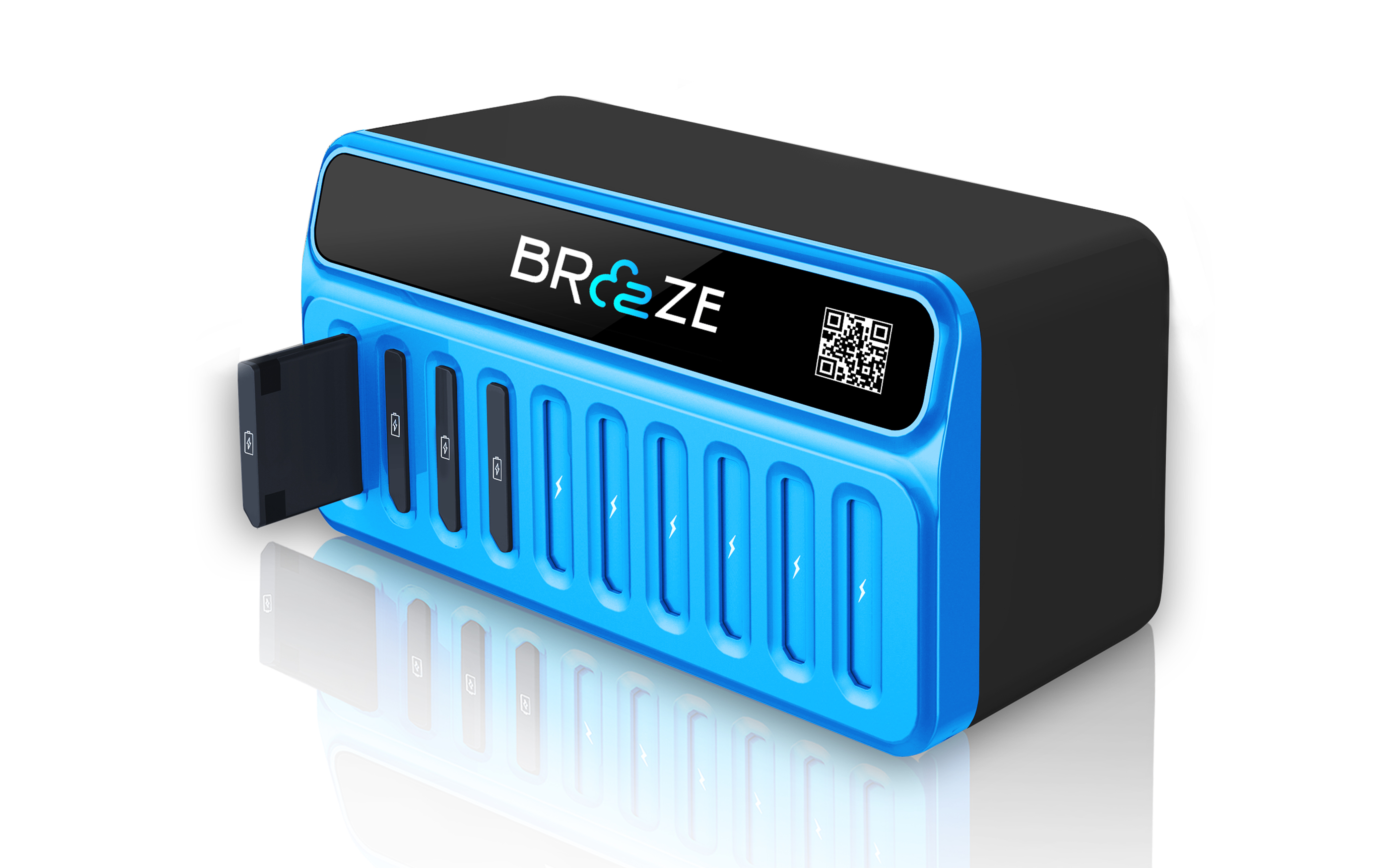
Ditching the bulky outdated power banks, Brezze has chosen to provide its users with sleek and easily portable power banks that accommodate both Apple and Android users. Brezze runs unique selling points over its competitors by charging a flat rate of RM1/hour and RM15/day; with absolutely zero deposit charged per rent. In addition to the affordability for users, Brezze’s service also holds an impressive profit margin, which is estimated to run anywhere between RM0.70 to RM0.90 per hour of rental.
With the universal need of constant battery life, it is no surprise that the practice of power bank rental is already a huge hit in China. In fact, an investment carnival in 2017 saw five power bank rental startups attract over 20 investment institutions, together pooling a staggering RMB 300 million (US$ 43 million) in financing in a single month. Anticipating similar response, Brezze Malaysia is confident in its business model, with the global brand already having established a presence in Singapore, Vietnam, Japan, Italy and is currently expanding in Malaysia. With initial penetration in Malaysia targeting the Klang Valley, Brezze Malaysia’s competitive analysis has calculated a potential average of 300 rentals per day within the 7 million Klang Valley population, with an average of 3 hours per rent.
Through crowdfunding, Brezze is aiming to raise RM300,000 for 13 percent equity, all of which would go to funding the purchase of products, sales and marketing, authority certification and licensing. Now I ask, who wouldn’t want a chunk of that?