
If I were to list my top ten things I fear most, lying spread-eagled getting a vaginal probe on a gynecologist’s examination table would easily be in my top five. I think this is true with a lot of women too. The embarrassment, the discomfort, the fear of what could be discovered, the list goes on.
The fear is indeed very real. The Ministry Of Women, Family and Community Development has quoted the findings from the Fifth Malaysian Population and Family Survey, showing that “fear” and “shyness” are reasons given by Malaysian women in not getting their PAP test done (14.4% and 11.9% respectively).
Yet, in today’s world where cervical cancer has taken away so many of our sisters, this is one fear women may not be able to run from.
Here are some scary but true facts:
- Cervical cancer is the fourth most frequent cancer in women with an estimated 570,000 new cases in 2018 representing 6.6% of all female cancers (source).
- Malaysia has a population of 11.55 million women ages 15 years and older who are at risk of developing cervical cancer. Current estimates indicate that every year 1682 women are diagnosed with cervical cancer and 944 die from the disease. Cervical cancer ranks as the 3rd most frequent cancer among women in Malaysia and the 2nd most frequent cancer among women between 15 and 44 years of age (source).
And here is the good news:
- Cervical cancer is not only curable if detected early, but is also largely preventable. Through regular screening tests – namely the PAP smear and the HPV DNA test – and the groundbreaking HPV (human papillomavirus) vaccination (which reduces the possibility of getting cancer by 70%), there is no reason women should die from cervical cancer (source).
It cannot get any clearer – any chance of curing or preventing this deadly disease is only through early detection. Women therefore, MUST get tested. The World Health Organization (WHO) has long been advocating the importance of this point, with programs, guidelines and publications aplenty. Similar efforts have been undertaken by our local Ministry of Health and Ministry Of Women, Family and Community Development, with news relating to cervical cancer prevention and activities filling up the media endlessly.
So, the “lying spread-eagled” part – the only way – to allow the doctor to extract vaginal sample for the tests, still needs to be done? Apparently, not anymore!
Cognizance of the fear factor has further propelled the need to address the issue, where we began to see the emergence of in vitro diagnostic (IVD) devices and DIY kits which allow women to take samples on their own, at their own convenience, anywhere they wish, eliminating the need to be examined by a doctor altogether. One then simply sends the sample to designated clinics or labs for analysis and wait.
Much as we rejoice in sisterhood spirit over this, a quick internet search on these devices and kits could quickly kill our excitement. They are largely unavailable to the local market, and even if some are, they are designed for EITHER the PAP test or the HPV test, not both. The options are indeed, very limited.
A ‘Do-it-Yourself’ kit called “Cervisafe” has been developed by LaDIY Health Care Sdn. Bhd. According to LaDIY, this device extracts cell samples for both PAP and HPV tests at the users’ convenience and privacy of their own home, and the procedure can be performed in ten minutes or less! The sample is then sent to a lab for analysis.
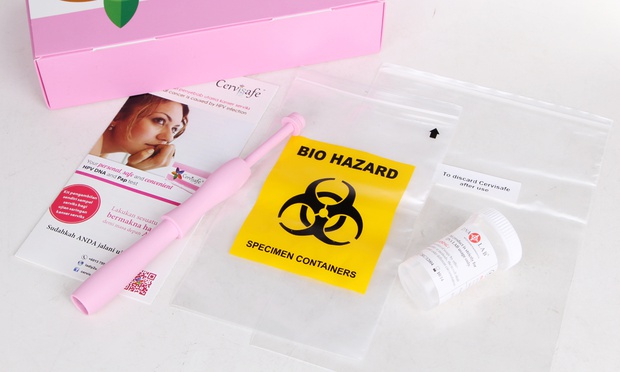
It boasts a patented tubular design and flower probe material which allows for a smooth and non-traumatic entry, making the cell collection simple, comfortable, and easy to perform. It also allows sufficient cell sampling to conduct both the PAP and HPV tests, resulting in a higher accuracy in diagnosis (>90%). This makes it superior to other devices currently available in the market which provides sampling through scrapping, which is more invasive, and/or those with questionable sampling methods which compromise the quality of the samples.
LaDIY has gained traction in the domestic market, with sales of Cervisafe mainly through government agencies and the Ministry of Science, Technology and Innovation’s (MOSTI’s) social awareness program on cervical cancer & prevention. Looking to further and actively penetrate the Malaysian market as its immediate plan, LaDIY hopes to thereafter develop and grow into the regional market of Indonesia and China, as these regions are currently ripe for tapping due to emerging economies. In the long term, it wishes to explore partnerships and possible acquisition to expand geographically. The company is also planning to establish its own diagnostic laboratory services with the aim to position itself as a one-stop medical diagnostic solution provider.
A market research by ReportLinker has found that the global in vitro diagnostics (IVD) market should reach $102.4 billion by 2022 from $74.1 billion in 2017 at a compound annual growth rate (CAGR) of 6.7%, from 2017 to 2022. The Asia-Pacific IVD market is expected to grow from $18.5 billion in 2017 to $34.8 billion in 2022 at a CAGR of 13.5% for the period 2017-2022, largely due to the ageing women population in the region. This is indeed, a promising outlook for Cervisafe and LaDIY.
LaDIY now seeks to raise RM3,000,000.00 in funds through ECF, looking to utilize it primarily on production of Cervisafe and development of its future and new products, their marketing plans/promotional campaigns in Malaysia, and regulatory framework which includes product registration for new markets in China and Indonesia.
To quote LaDIY’s Managing Director/Chief Executive Officer, En. Romli Ishak:
“… (with Cervisafe, and) without the presence of doctors or medical personnel, women would be more willing and less embarrassed to do these (PAP and HPV) tests.”
And we say Amen to that!
Visit LaDIY’s Deal Page to find out more on how you can be part of them @ https://ata-plus.com/deals/ladiy