Without paying too much attention, we have an apparent energy-wasting habit that we practice in our daily lives – from leaving the lights on when nobody is in the room, to leaving unutilised electronics plugged in. With the growth of global population, currently over 7.6 billion (source), and the rise of industrialisation in developing nations, the global demand for energy is not stopping, therefore, contributing to the alarming carbon footprint.
More than half of our energy comes from fossil fuels, extracted from deep within the Earth’s crust. Fossil fuels are considered non-renewable resources and consist of coal, oil, and natural gas. They release carbon dioxide, a potent greenhouse gas, into the atmosphere when burned. Greenhouse gases trap heat from the sun in the Earth’s atmosphere, causing temperatures to rise. According to an article by Popular Science, if we burn all of the remaining fossil fuels on Earth, almost all of the ice in Antarctica will melt, potentially causing sea levels to rise by as much as 200 feet-enough to drown most major cities in the world. A devastating reality that unfortunately our great great grandchildren will have to endure.
According to a report by the Asia Development Bank, carbon dioxide emissions are expected to hike up to 65% by 2035 to 22,113 million tons in the Asia Pacific region. By then, the Asia Pacific alone will be accounted for more than half the world’s greenhouse gas emissions if the bank’s projections are on target. Additionally, the bank also predicts that the 48 nations of the Asia Pacific region will collectively increase their energy demand by 67% between 2010 and 2035, accounting for more than half the planet’s consumption. Of which, Malaysia has contributed to consuming its primary energy from coal (25.4%) and petroleum (23.5%).
However, the most shocking discovery found in this research is not how much energy we are using, but rather the amount of energy we are actually wasting. In a recent survey, the United States was ranked second of the world’s top energy-consuming countries of 2,201 MTOE (Million Tonnes Oil Equivalent) in 2017, behind China. As a nation that populates less than 5% of the world, it consumes about 18% of its energy, whilst wasting a great deal of it in the process according to Business Insider. Malaysia, on the other hand, is consuming more and more energy steadily, making it one of the biggest energy consumer in South East Asia. (source).
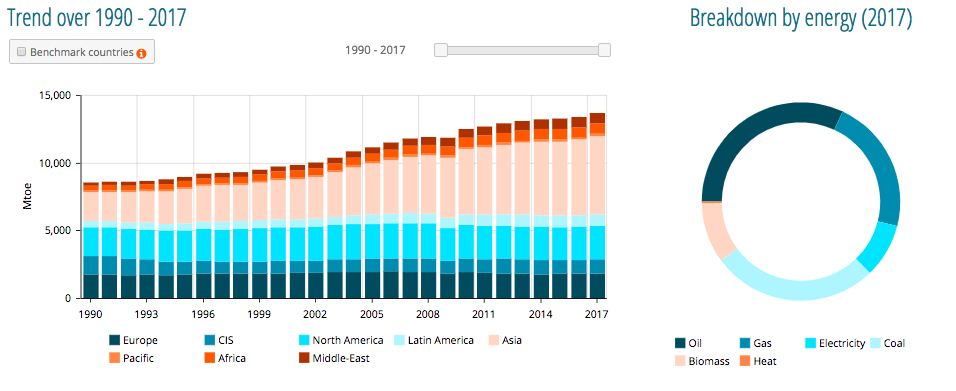
(Acceleration in energy consumption in 2017 (+2.3% vs. 1.1% in 2016)
An average American waste about 283 KW hours of energy in a month. That’s equivalent to leaving an electric oven running at 350 Fahrenheit for 6 full days (source). Not only is it harmful to mother nature, but it’s also extremely costly. As proven by The Association of Decentralised Energy, which analysis shows how the UK electricity system wastes a staggering £9.5 billion from the loss of energy before it reaches homes and businesses.
As demand for electricity in Malaysia outstrips supply, we need to start adopting alternative ways to sustain energy. Newton ECO Technology (NET) focuses on the development of energy-saving technology as well as green energy application. A one-stop integrated total energy management solutions. With the Malaysian government commitment to funding infrastructure projects related to environmentally friendly buildings. There is also a tax subsidy program for green technology projects in Malaysia. Encouraging us to practice a sustainable and greener future.